

the face is not a thing, but a situation
dior sauvage, exosomes, and do tradwives just want to stay children?


Hi everyone!
It’s the week after my wedding, and this is my current state:
 Tiktok failed to load.
Enable 3rd party cookies or use another browser
I wanted a casual, small civil wedding at first, but in the end I had six different outfits shared over 48 hours of bliss. We still had a small wedding though, we could each choose 20 people (both friends + family) which is not easy! I had managed to get my hair from dark brown, almost black, back to my natural blonde in under a few months, just in time for the wedding. Something I did secretly as an act of love for my parents, who have always known me blonde.
Romy Schneider was one of the many images on my hair vision board, and most things during the wedding turned out to be totally different from anything I had imagined beforehand. I had a blast though, and will talk about it in detail soon: face + body prep, mindset, inspiration, etc. etc.
First I need to detach from it a bit, and I do that by bathing in other worlds: articles, movies, everything that is not my own life for a minute. I hope you enjoy these selected reads and videos as much as I did.
read/watch/listen + enjoy your sunday morning coffee

I wanna start with perfume.
A bottle of Dior Sauvage sells every thirty seconds. The liquid inside is a woody, peppery amber that smells, depending on who you ask, like a man who has his life together or a man who is about to ruin yours. The face of the bottle is Johnny Depp, who has been the face of Sauvage since 2015 and who, in a London court, was found to have abused Amber Heard on at least twelve occasions. The fragrance is now widely described as a red flag, a fuckboy scent if you will. When a streetwear brand spritzed a hoodie with Sauvage and asked strangers to blind-review it, the word “toxic” came up immediately.
How the world’s most popular cologne became a smelling salt for bad decisions - The Independent

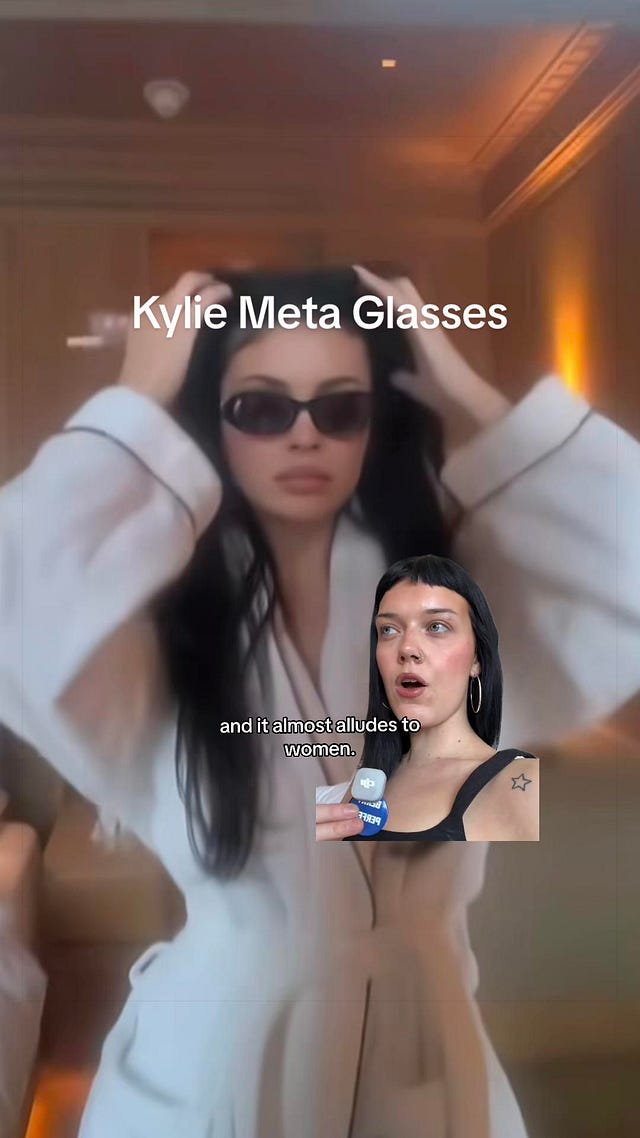
We talked about Meta glasses in this letter before but a lot has happened since then, with as the main event, Kylie Jenner now being the face of them. As this TikTok points out, the collaboration is designed to rope in women consumers with a wink: we know you were the ones being recorded, but look, now you can record back, returning the gaze. Returning the gaze within patriarchy was never possible but maybe with Meta glasses it is, in a way that is not necessarily objectifying men back (even with looksmaxxing I don’t think its possible) but to record their inappropriate actions.
At the moment, I don’t know exactly where I stand since I do like the idea of the misogynist actions of men being recorded in stead of them getting away with everything, but the idea of even more of a surveillance society really freaks me out.
What if almost everyone wears the glasses (and hacks the blinking light that reveals it’s recording, like men already figured out), and the meaning of public and private bends and blends? Will privacy become the biggest value in life? Will people isolate not because of a pandemic but because at home will be the only place they feel safe from surveillance? Will social anxiety stop becoming a diagnosis because it will be normalised? something that everyone experiences in some way or another, just by existing in a surveillance society?
 Tiktok failed to load.
Enable 3rd party cookies or use another browser


I’ve said before I’m tired of the looksmaxxing discourse, but in the context of everything above, this NYT piece is worth your time. I will never get exhausted by the male gaze as a concept, because the term keeps explaining things to me (lmao).
As most of you probably know, women are conditioned to carry a little illusory man in their head, watching them at all times, while men generally do not care as much how women see their bodies, posture, hygiene or clothing. This is because men are motivated by men, and there is a term for this. Eve Kosofsky Sedgwick called it homosocial desire, in Between Men (1985): men’s ambitions and rivalries are structured around the regard of other men, not women. This has nothing to do with sexual preference btw. Marilyn Frye got there two years earlier in The Politics of Reality, arguing that women function as stagehands in a play performed by and for men, and that the arrangement is a coordinated withholding of attention.
I witnessed homosociality firsthand last year, when I landed in a writing course accidentally surrounded by mostly right-wing + white, straight men from the US. In a group call I asked why all the references and sources were exclusively by other men, and one of them told me he was not interested in “female writing” because “we are so different” (as if women only write about menstrual cycles, I thought at the time, eyeroll followed by full body terror). The teacher, a creator I had admired for his intelligence and system thinking before I knew about his politics, told me he “sometimes talks to his girlfriend about books she reads by women”, but that he rarely finds himself reading female authors himself. I left the course that same day.
Looksmaxxers actually don’t care what women think, The New Yorker


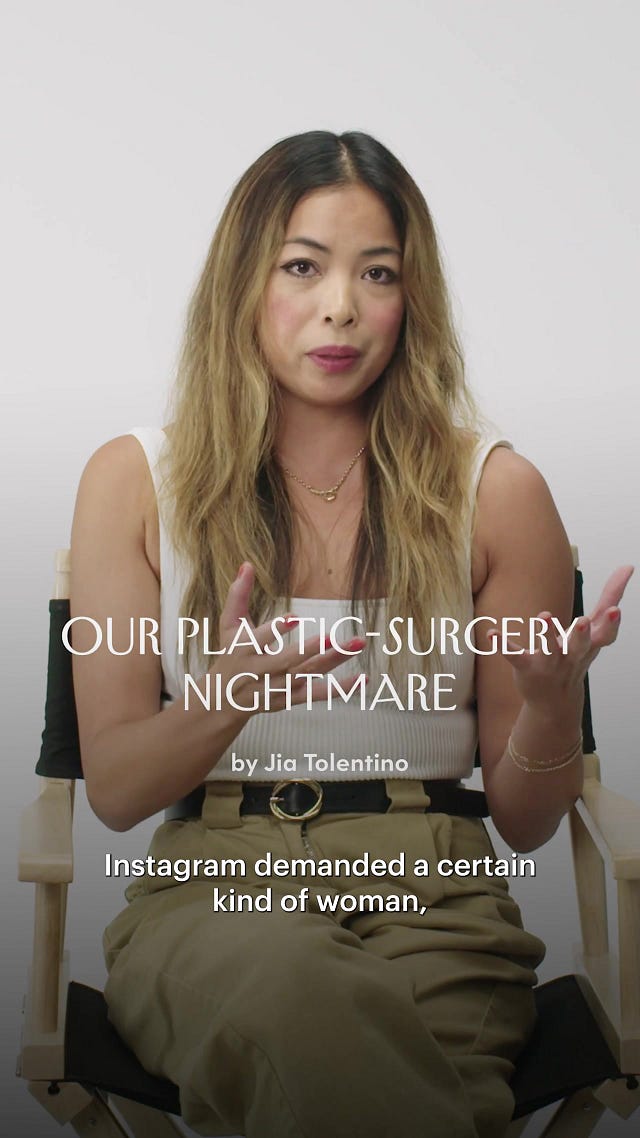
Please check out this clip from a Jia Tolentino essay for The New Yorker that I have not stopped thinking about. Her essay starts by quoting Simone De Beauvoir: “ the face is not a thing but a situation - one that is, increasingly, more technically beautiful but more spiritually unattractive, replete with new information but devoid of human meaning”. What shocked me most was learning about 14 year olds having anti-aging skin routines, and people under 20 getting botox. Might not be that surprising of a consequence of everything, but it still shocked me:
 Tiktok failed to load.
Enable 3rd party cookies or use another browser
Our Plastic Surgery Nightmare - The New Yorker
What does beauty look like when it’s not being filtered through a screen or a man’s preferences or an algorithm’s incentive structure?
It also made me think of botox + filler on screen. Female actors are pressured to look like they’re in their twenties for as long as possible. At the same time their body is their medium, their art shines through their movements. As audience, we want to be mesmerised, we want to be sucked into the story. A good movie or tv show makes us forget where we are and who we are, but watching a period piece and seeing an actor with a frozen face or lip filler can be really distracting. I can’t find the video I saw about this last year but this one also gets the point across:
 Tiktok failed to load.
Enable 3rd party cookies or use another browser
On a way more serious note,
Dr. Sana’a Kabariti is a pharmacist and aesthetician in Gaza. Dazed Beauty profiled her last week. After five months of not working due to the genocide, and witnessing its effects on her own skin, Dr Kabariti decided to resume her practice. When she first started giving free consultations in Rafah, she assumed that people in Gaza wouldn’t have the mental capacity to think about their skin, but found the exact opposite. “The clients were very engaged. Before the war, their concerns were about maintenance, but they now faced skin conditions that could not be ignored and clearly required treatment.” I’ve been watching her video’s since reading this article and it really, really humbled me. The way she finds beauty in the small things every single day, while surviving in the most inhumane conditions, I truly don’t have the words for it. So important to see. Beauty under siege: The women in Gaza holding onto self-care - Dazed
The Eco Well noted that beauty science fearmongering has gotten noticeably worse over the last year:
If you want to participate in a tiny little act of sustainability without greenwashing, you can try this at home:
 Tiktok failed to load.
Enable 3rd party cookies or use another browser
I want to share a sharp little observation from Simone Grace Seol. I think it’s important to show different perspectives, I am not a big fan of choice feminism (especially fully played out) and at the same time, I find it hard to find a constructive alternative under patriarchy. We’re all doing our best figuring it out, I think the best we can do is bring kindness and awareness towards each other that other systems are possible. And that inner deconditioning from harmful systems is a necessity in order to move to a better place. At the same time, surviving (and thriving) under these harmful systems is also important, and I think women know better than anyone that holding all of these complexities, these opposing parts, is exhausting but also very necessary:
tradwives want to stay children
On this topic, I believe we should not stop talking about tradwives during these regressive times and this tiktok reframed the trad wife discourse for me. And I’d argue there is never too much of De Beauvoir in a time where womens rights are being rolled back globally. In this video, a philosophy professor explains Simone de Beauvoir’s theory of freedom: freedom is good, but it is not easy. It produces anxiety. It means you are responsible for every choice. The trad wife fantasy, she argues, is about not wanting to take responsibility for your own freedom. Beauvoir called this the temptation to stay in a childlike state - (the illusion of being) taken care of, never accountable and safe.
 Tiktok failed to load.
Enable 3rd party cookies or use another browser
once again established: pilates is political

market + science update
I want to talk about exosomes again because the word is literally everywhere right now in skincare land, I see it in so many products and in clinic menus while most of the online skin experts on my FYP talk about it. It sounds precise, sci-fi almost, tiny messengers shuttling instructions between cells. It definitely sounds promising, but I feel like its also confusing consumers.
A 2025 systematic review in Stem Cell Research & Therapy pulled together every published human study on cell-derived actives for skin, nineteen studies with 624 patients total, and the authors split the evidence into two categories that most people selling you something do not bother to distinguish.
Extracellular vesicles is the umbrella, and exosomes are the small ones underneath it. These are 30 to 200 nanometers, released from inside the cell, carrying proteins and RNA. Four of the nineteen studies looked at these. Conditioned media is the other bucket, the fluid cells are grown in, rich in growth factors and cytokines but containing no vesicles at all, and fifteen of the nineteen studies, 79% of the evidence base, were about this. Everyone is selling exosomes while the actual studies are mostly about conditioned media, and that gap is (often deliberately I think, by both brands and contract manufacturers or at least one of them in the process of R&D) where most of the marketing lives.
The numbers are actually pretty promising: treated skin showed roughly 27% more elasticity, 21% more hydration, 10% less melanin over eight weeks, all statistically significant and published and reproducible. But the strongest results came from combining the regenerative fluid with microneedling or fractional CO2 laser, procedures that create hundreds of microchannels so the payload actually enters the skin. And I think the biggest take away here is that the jar of exosome serum patted on with your fingertips is not the same intervention as the one in the study.
The evidence is also early. Only five of nineteen studies were rated low risk of bias, samples were small, follow-ups were short, and nobody has run the trial that tells you what happens when someone uses these products every day for three years. Safety so far is genuinely reassuring, no serious adverse events and mostly transient redness.
And, not unimportant: “exosomes” on two different bottles can mean two completely different things, because the sources in the review ranged from Lactobacillus plantarum to bovine milk to adipose stem cells to umbilical cord, and the composition shifts with cell type and culture conditions and purification method. The review’s own conclusion is that standardisation remains unresolved, so you cannot compare product A to product B just because they share a name.
So, terminology. The phrase I’ll be using is cell-derived actives, because it is accurate and plain and doesn’t assume you already know the taxonomy. Regenerative skincare is the field’s own label and it’s fine for the category, but it is vague. Exosomes should be used only when you mean exosomes specifically, which is probably almost never. And “stem cell skincare” should not appear on any label you trust, because no live cells are involved in any of these studies. you are not rubbing stem cells into your cheeks, and regulators flag this phrase as misleading for a reason.
If a brand says their topical exosome serum is “clinically proven” to reverse aging, they are using one of four studies, possibly the wrong word, and, with what we know as of this moment, definitely the wrong delivery method. If a brand says they use cell-derived actives, describes their sourcing, and is honest about what the evidence can and cannot say yet, that is a different conversation worth having.
The science is still evolving, so for now I’ll keep my regenerative ingredients to in-office treatments rather than my topical routine.


3 things I love
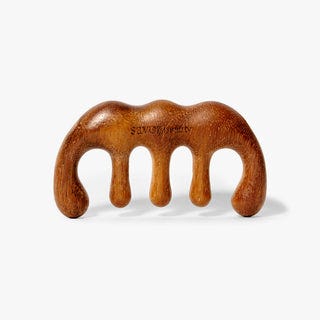
I’ve been very much into self massage lately, together with stretching and shaking my body on the daily it makes me feel, buzzy in the best way, and so good and grateful to be in my body. I bought a wooden massager similar to the one pictured, in Seoul Korea last february. You can google image reverse to find a similar one more close to home.
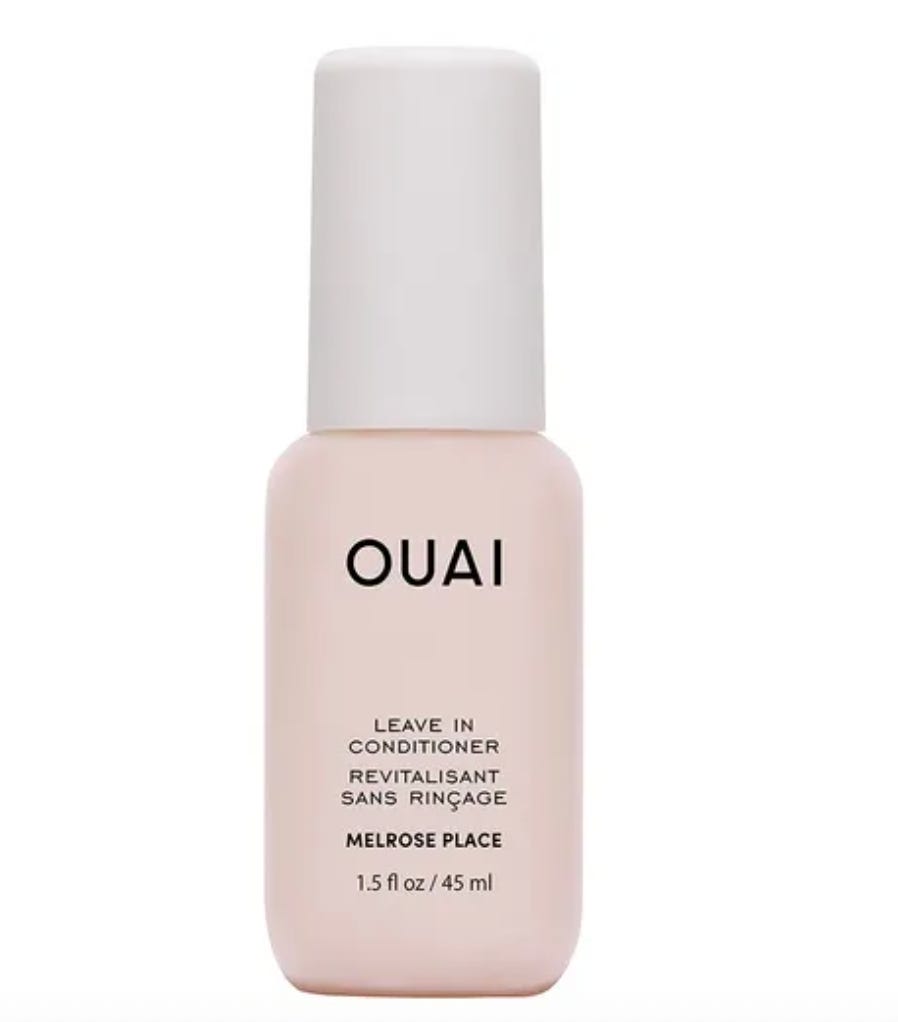
I’ve been loving Ouai’s leave in conditioner, I have extentions at the moment and they need daily conditioning care, ideally without daily water. The travel size slips into even my smallest day bag.
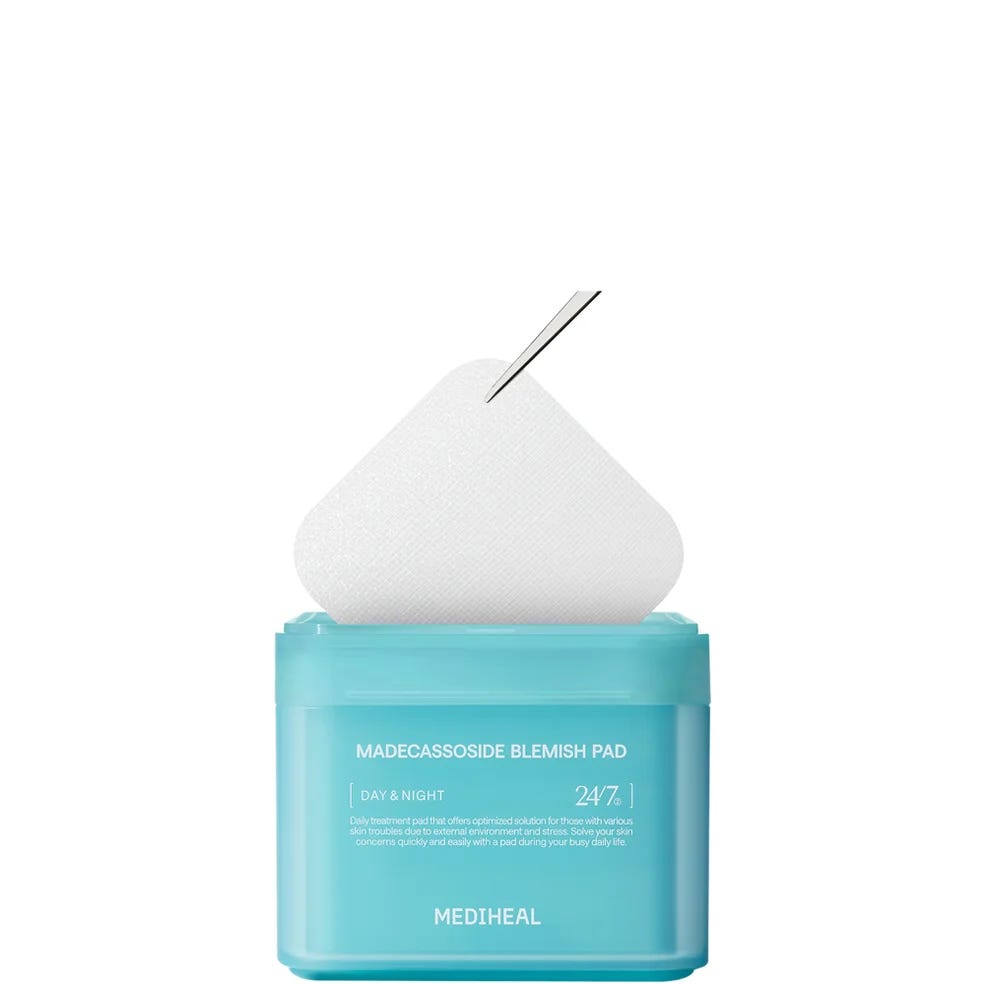
K-beauty is often about reducing heat + inflammation in the skin, since that can speed up cell aging. These korean Mediheal cica pads have been proven to reduce heat irritation and reduce blemishes. Madecassoside is an active compound found in cica, or centella asiatica. I love storing pads + sheet masks in the fridge during summer for a daily cooling moment.
I’ll close off with Anne Hathaway’s dedication to sun protection is every dermatologist’s dream
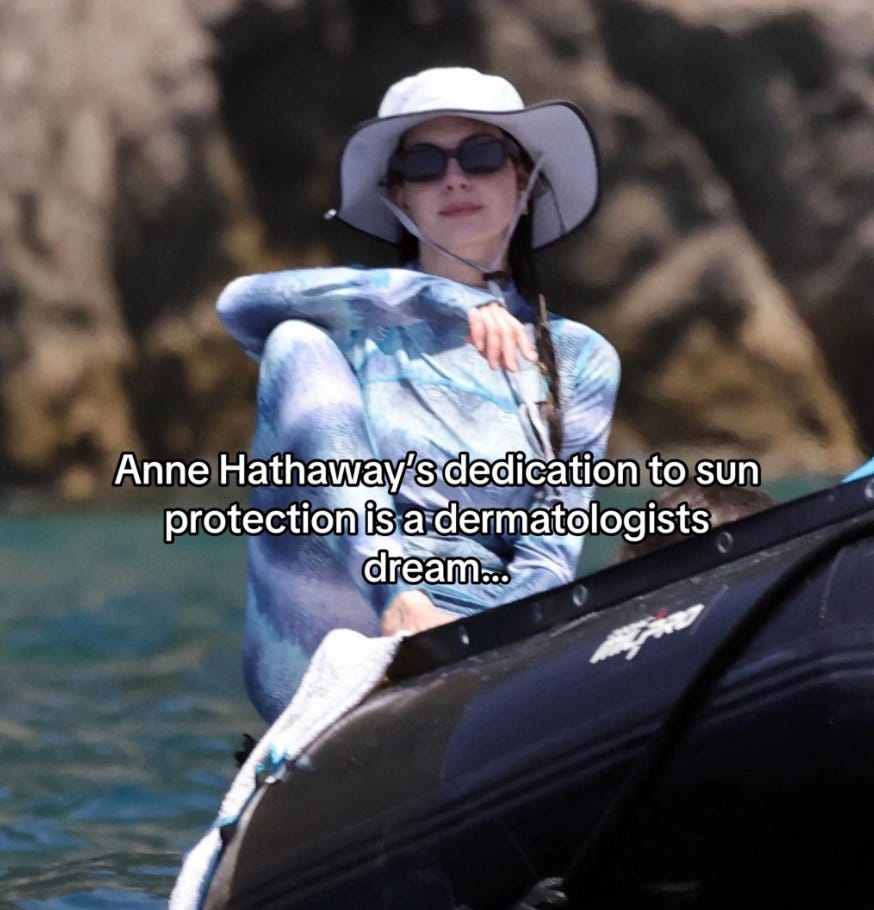
xoxo, soft glow <3

Excellent essay. Thank you!
Missed your substack Romy, welcome back! I support clog girl summer